
31°C, New York


Notification products, updates
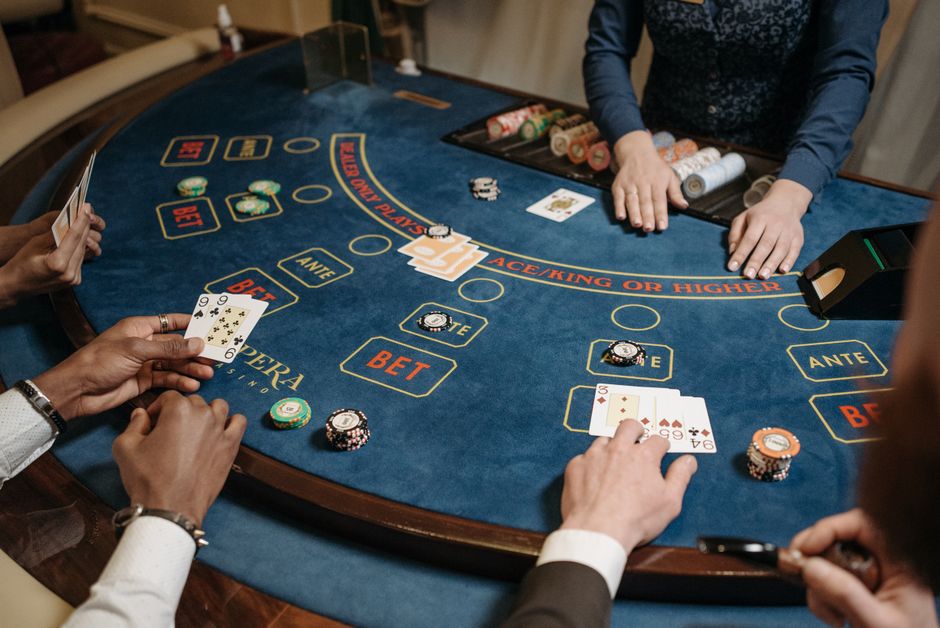
You've seen the flashy ads: a smiling twenty-something wins a life-changing jackpot on a slot machine, a poker pro reads his opponent like a book, and a sports bettor turns $10 into $10,000 on a last-second touchdown. The iGaming industry is a multi-billion-dollar machine that thrives on these moments. But behind the glamour lies a complex ecosystem of math, psychology, and regulation. Whether you're a casual player or a curious observer, understanding how casino games, sports betting, slots, and poker actually work can transform your experience from blind luck to informed decision-making. Let's cut through the noise and look at what really happens when you click 'spin' or 'bet'.
Every casino game is built on a mathematical advantage for the house. This isn't a conspiracy; it's a business model. The house edge is the percentage of each bet that the casino expects to keep over the long run. For example, European roulette has a house edge of 2.7% (because of the single zero), while American roulette doubles that to 5.26% thanks to the double zero. Blackjack, when played with basic strategy, can have an edge as low as 0.5%. Slots are a different beast entirely—their house edge can range from 2% to 15% or more, depending on the machine and jurisdiction. Anyone weighing up options should see LLWIN.
What does this mean for you? In the short term, anything can happen. You might hit a royal flush on video poker or win 10 hands of blackjack in a row. But over thousands of bets, the math grinds you down. The key is to choose games with a lower house edge if you want your bankroll to last longer. Avoid sucker bets like the tie bet in baccarat (14.4% house edge) or the wheel bet in roulette. And remember: the house edge is not a guarantee for any single session—it's a long-term average.
Slot machines are the most popular iGaming product, accounting for roughly 70% of casino revenue in the US. Modern slots are not your grandfather's one-armed bandit. They're sophisticated random number generators (RNGs) that produce thousands of outcomes per second. The outcome of each spin is independent of the last—there's no such thing as a 'hot' or 'cold' machine. However, slot designers use psychological tricks to keep you playing: near-misses (two jackpot symbols with one just off the payline), losses disguised as wins (a bonus that pays less than your bet), and cascading reels that give the illusion of progress.
If you want to maximize your slot play, look for games with high RTP (Return to Player) percentages. Online slots often publish RTPs ranging from 94% to 97%, while land-based machines might be set as low as 85%. Also, check the volatility: high-volatility slots pay less often but with bigger potential wins, while low-volatility slots pay smaller amounts more frequently. Your choice depends on your bankroll and risk tolerance.
Sports betting has exploded in the US since the Supreme Court struck down the Professional and Amateur Sports Protection Act in 2018. Today, you can bet on everything from the Super Bowl to the Albanian second division. But betting is not just about picking winners. The most common bet is the point spread, where the underdog gets a head start and the favorite gives points. The odds are set by sportsbooks to balance action on both sides, ensuring a profit via the vig (commission), usually around 10%.
Sharp bettors look for value: when the odds imply a lower probability than the true probability. For example, if you think a team has a 60% chance to win, but the odds are +150 (implying 40%), that's a value bet. However, consistently beating the closing line is incredibly difficult. Most casual bettors lose over time, but with disciplined bankroll management (e.g., betting 1-2% of your bankroll per play) and a focus on one sport or league, you can tilt the odds slightly in your favor.
Poker is unique in the iGaming world because you're not playing against the house—you're playing against other players. The house takes a rake (a small percentage of each pot) or charges a tournament fee. This means that in the long run, skill matters. A good poker player can consistently win because they exploit weaker opponents. The key skills are hand selection, position, bet sizing, and reading opponents.
Online poker has evolved dramatically. In the early 2000s, a tight-aggressive strategy could crush low-stakes games. Today, even micro-stakes players use solvers and trackers. But that doesn't mean you can't win. The softest games are often live, low-stakes, or in less popular variants like Omaha or Stud. If you're serious about poker, focus on one game, study ranges, and review your sessions. Emotional control is just as important as mathematical knowledge—tilt can destroy your win rate faster than a bad beat.
iGaming is changing fast. Regulators are tightening rules, especially around advertising and bonuses. In the UK, the Gambling Commission has banned credit card deposits and imposed strict affordability checks. In the US, each state has its own rules, creating a patchwork of legalities. Meanwhile, AI is being used to detect problem gambling patterns and to personalise offers—a double-edged sword. On one hand, AI can help identify at-risk players and intervene; on the other, it can be used to keep you playing longer.
As a player, the best defence is education. Understand the odds, set limits, and never chase losses. iGaming should be entertainment, not a financial strategy. If you're not having fun, walk away.
So the next time you log into a casino, place a bet, or fire up a poker table, remember: the games are designed to take your money, but with knowledge, you can at least make smarter choices. Whether you're spinning slots for fun or grinding poker for profit, the house always has an edge. Your edge comes from discipline, bankroll management, and knowing when to stop.

Jade Gorse shares practical, down-to-earth guidance on british gardening and plant care for readers across the UK.
Stay Tuned With Updates


Leave A Comment